


How Much Protein Is in 100g Paneer? (And Better Sources)
- Paneer provides approximately 18 grams of protein per 100g, measured as-eaten, a genuinely solid figure but lower than several dals, nuts, and seeds when compared fairly.
- Paneer's real strengths are being a naturally complete protein, providing meaningful calcium, and requiring no preparation, while its main trade-offs are a comparatively high fat and calorie density and being unsuitable for anyone avoiding dairy.
- Several foods provide more protein per 100g than paneer, including dry dals like masoor and urad at roughly 24 to 25 grams, and nuts and seeds like hemp, peanuts, and almonds ranging from 21 to 31 grams, though these figures reflect raw or dry weight rather than paneer's as-eaten state.
- Whether a "better" source actually exists depends on what you are optimising for: protein density, amino acid completeness, dairy avoidance, or cost, since no single food wins on every dimension at once.
- SUPER PLANT COLLAGEN PROTEIN from Eat Breathe Smile provides a complete plant protein alternative for anyone avoiding dairy, available in Unflavoured, Chocolate, Pineapple, and Pink Guava.
- All EBS products are FSSAI approved, MSDS certified, and tested for heavy metals. 100 percent natural. 100 percent vegan. No preservatives.
- The Direct Answer: Protein in 100g Paneer
- Why Paneer's Number Looks Good, and What It Doesn't Tell You
- The Real Benefits of Paneer as a Protein Source
- The Trade-Offs: Fat, Calories, and Dairy Considerations
- Paneer vs Other Protein Sources: The Comparison Table
- Vegetarian Sources That Beat Paneer on Protein Density
- Why "Better" Depends on What You're Optimising For
- Complete Protein: Where Paneer Actually Has an Edge
- Building a Day That Doesn't Rely on Paneer Alone
- Where SUPER PLANT COLLAGEN PROTEIN Fits as a Vegan Alternative
- Related Reading
- Frequently Asked Questions
Paneer has a reputation as one of the great protein foods of Indian vegetarian cooking, and it deserves a good part of that reputation, but the actual number is more modest than most people assume, and it is worth knowing exactly what that number is before deciding what, if anything, should sit alongside it on your plate.
At Eat Breathe Smile, SUPER PLANT COLLAGEN PROTEIN offers a complete plant protein alternative for anyone avoiding dairy or wanting to close a protein gap paneer alone doesn't cover. Every EBS product is FSSAI approved, MSDS certified, and tested for heavy metals, with reports on the EBS certifications page.
As Health and Life Coach Nipa Asharam puts it: paneer gets treated as a protein powerhouse mostly because it feels rich and satisfying, not because anyone actually checked the number against the alternatives sitting right next to it in the same kitchen.
Last reviewed: August 2026
1. The Direct Answer: Protein in 100g Paneer
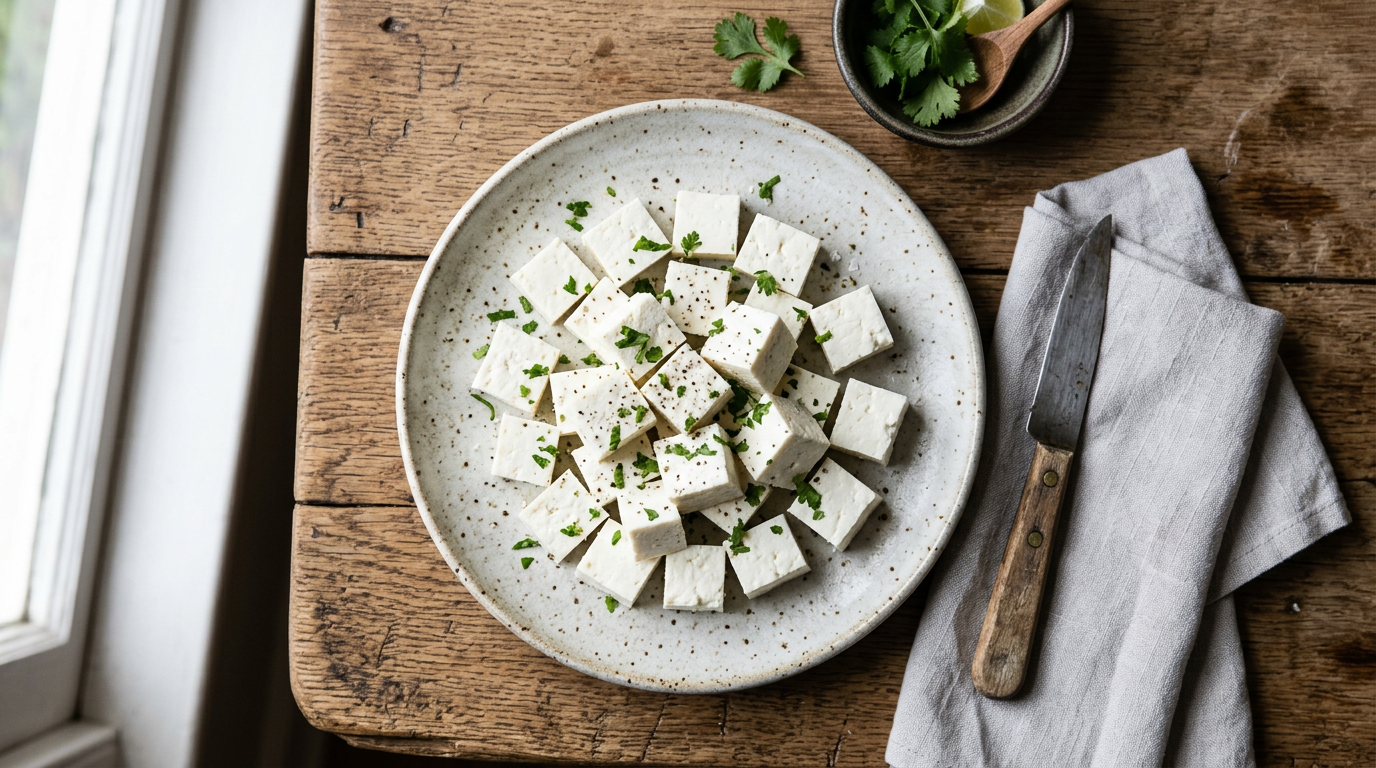
Paneer provides approximately 18 grams of protein per 100g, measured as-eaten in its typical prepared form, not as a dry or raw ingredient.
Why This Figure Is Already Fairly Efficient
Unlike dry legumes, which show a considerably higher per 100g figure before cooking and absorbing water, paneer is already in its final, ready-to-eat state when this figure is measured, making 18 grams per 100g a genuinely solid, directly usable number without any further adjustment needed.
A quick reference point: A typical 100g cube of paneer, roughly the size of a small block, provides about the same protein as a full bowl of cooked dal, in considerably less volume and preparation time.
2. Why Paneer's Number Looks Good, and What It Doesn't Tell You
The Perception Gap
Paneer's rich texture and its prominent place in protein-focused Indian meals create an intuitive impression that it must be an exceptionally high-protein food, one of the highest available. The actual figure, while genuinely good, does not quite live up to that reputation once compared fairly against other common sources.
What the Number Alone Doesn't Capture
A single per 100g figure says nothing about fat content, calorie density, amino acid completeness, or suitability for someone avoiding dairy, all of which matter just as much as the protein number itself when deciding how paneer fits into an overall diet. Two foods can share an identical protein-per-100g figure while differing considerably in every other respect that actually affects whether that food fits a specific goal, whether that goal is managing calorie intake, avoiding dairy, or simply eating a genuinely varied diet.
3. The Real Benefits of Paneer as a Protein Source
A Naturally Complete Protein
Paneer, as a dairy product, is naturally a complete protein, providing all nine essential amino acids in adequate amounts without needing to be paired with anything else, a genuine advantage over most individual plant proteins.
Meaningful Calcium Alongside Protein
Paneer also provides meaningful calcium content alongside its protein, a combined nutritional contribution that is genuinely useful and not something every high-protein food offers at the same time.
No Preparation Required
Unlike dals, which require soaking and cooking, paneer is ready to eat immediately, a practical convenience advantage that matters for how consistently a food actually gets eaten day to day.
4. The Trade-Offs: Fat, Calories, and Dairy Considerations
Higher Fat and Calorie Density
Paneer carries a comparatively high fat content alongside its protein, meaning it delivers meaningfully more calories per gram of protein than several leaner alternatives, relevant for anyone specifically managing calorie intake alongside protein goals.
Not Suitable for a Dairy-Free Diet
As a dairy product, paneer is not an option for anyone avoiding dairy for allergy, intolerance, or vegan dietary reasons, a straightforward but important limitation covered further in Section 10.
Neither of these trade-offs makes paneer a poor food choice. They simply mean paneer is not automatically the optimal protein source for every goal or every person, which is exactly the nuance the rest of this article works through.
5. Paneer vs Other Protein Sources: The Comparison Table
| Food | State Measured | Protein per 100g (approx.) |
|---|---|---|
| Hemp seeds | Raw | 31g |
| Peanuts | Raw | 26g |
| Masoor dal / urad dal | Dry | 25g |
| Almonds | Raw | 21g |
| Chana dal | Dry | 20g |
| Paneer | As-eaten | 18g |
| Sesame seeds | Raw | 18g |
| Quinoa | Dry | 14g |
This table mixes as-eaten and dry-weight figures, which is not a fully fair comparison on its own, as covered in the vegetarian protein ranking guide linked above. It is shown here specifically to illustrate where paneer sits relative to commonly cited numbers, not as a final verdict on which food is objectively best.
6. Vegetarian Sources That Beat Paneer on Protein Density
Dals, Once Adjusted for Weight
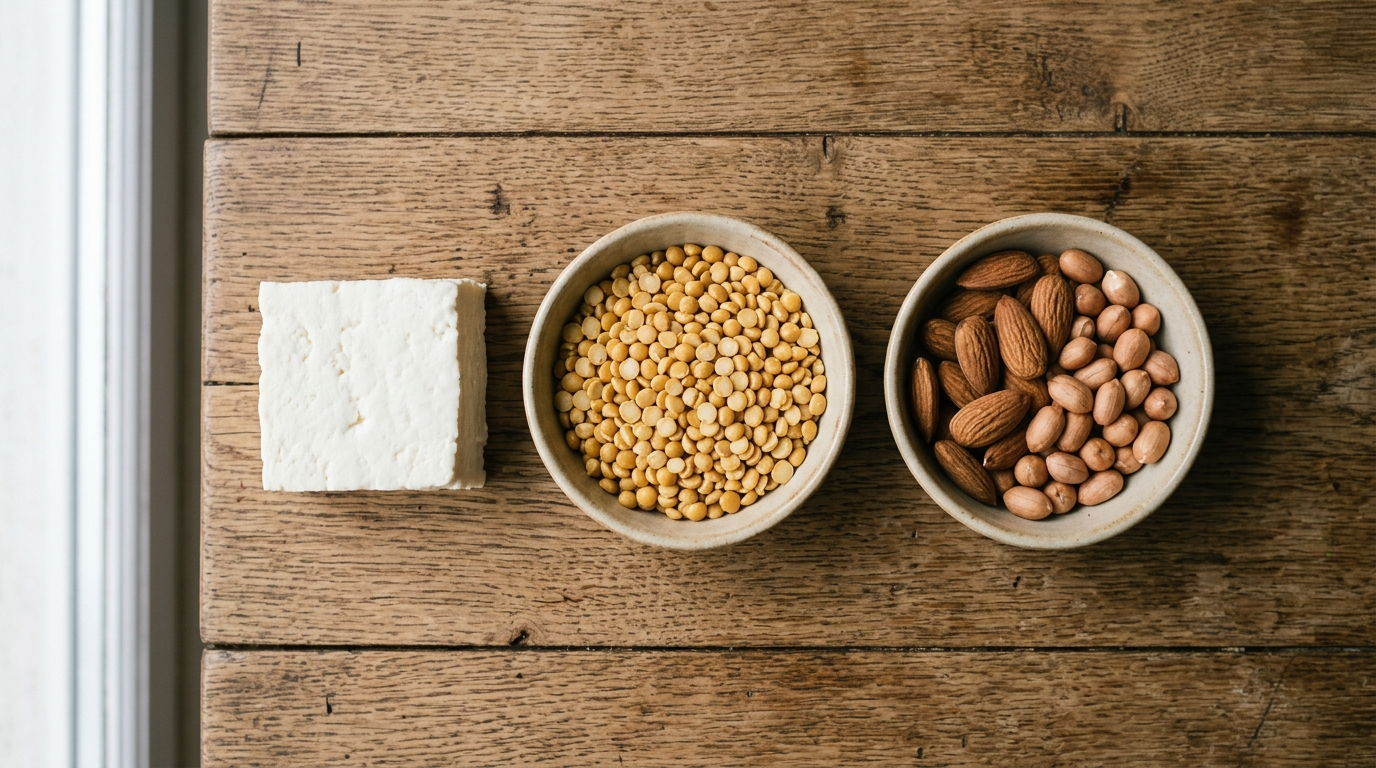
Research published in Nutrition Reviews confirmed that protein quality and quantity both meaningfully affect a food's actual nutritional contribution, relevant to why dry dals like masoor and urad, at roughly 24 to 25 grams per 100g dry, technically outrank paneer, though a fair comparison requires accounting for the water dal absorbs once cooked.
Nuts and Seeds
Hemp seeds, peanuts, and almonds all provide more protein per 100g raw than paneer provides as-eaten, though realistic portion size, a small handful rather than 100g, matters considerably when comparing total protein actually consumed in a typical serving.
A Complete Protein Without the Dairy
If paneer's dairy content is a limitation for you specifically, SUPER PLANT COLLAGEN PROTEIN provides a complete plant protein alternative built the same way paneer's completeness works, through the full amino acid picture, not a single source.
Shop SUPER PLANT COLLAGEN PROTEIN7. Why "Better" Depends on What You're Optimising For
Protein Density vs Amino Acid Completeness
A food with a higher protein-per-100g figure is not automatically "better" if it lacks the amino acid completeness paneer provides naturally, meaning the honest answer to "what's better than paneer" depends entirely on which specific quality you are prioritising.
There is no single winner: Asking "what beats paneer" as if there is one universal answer misses the point. A dense dal wins on cost. A nut mix wins on convenience for a quick snack. A plant protein blend wins for anyone avoiding dairy. Paneer wins on completeness without needing anything paired alongside it. Each answer depends on the actual question being asked.
Cost, Convenience, and Dietary Preference
Paneer's convenience and complete amino acid profile may make it the practical winner for someone prioritising simplicity, while a dense dal or protein-rich nut mix may be the better choice for someone prioritising cost or protein density specifically, and a plant protein blend may be the only viable choice for someone avoiding dairy entirely.
8. Complete Protein: Where Paneer Actually Has an Edge
Why Completeness Matters as Much as Quantity
Research published in the American Journal of Clinical Nutrition confirmed protein's well-documented role in tissue maintenance depends on the full essential amino acid profile being available, relevant to why paneer's natural completeness is a genuine advantage that a higher-ranking but incomplete plant protein, eaten alone, does not automatically provide.
How Plant Sources Catch Up
Plant proteins achieve the same completeness paneer offers naturally only by combining complementary sources, such as dal with rice, or a formulated blend combining two plant proteins deliberately, which is a genuinely comparable but different route to the same nutritional outcome.
9. Building a Day That Doesn't Rely on Paneer Alone
None of the individual comparisons covered so far are meant to crown a single winning food. The more practical question is how to structure a full day around a genuine mix of sources rather than leaning heavily on any one, paneer included.
Why Variety Matters More Than Any Single Food
Research published in the Journal of Research in Medical Sciences confirmed that gut mucosal lining integrity is directly relevant to nutrient absorption efficiency, relevant to why relying on any single protein food, including paneer, across an entire day is less effective than spreading protein intake across multiple sources and meals.
A Practical Mixed Approach
Combining paneer at one meal, dal at another, and a complete protein source like a plant protein blend at a third point in the day spreads both the protein load and the nutritional variety more effectively than concentrating on one food alone. Research published in Gut Microbes confirmed the documented relationship between dietary variety and broader metabolic and gut signalling, relevant to why varying protein sources across a day offers benefits beyond amino acid completeness alone.
- Paneer provides approximately 18 grams of protein per 100g as-eaten, a genuinely solid and efficient figure, though lower than several dals, nuts, and seeds when compared on a per 100g basis.
- Paneer's real strengths are natural amino acid completeness, meaningful calcium content, and zero preparation time. Its trade-offs are higher fat and calorie density and unsuitability for a dairy-free diet.
- Several vegetarian foods technically outrank paneer on protein density, but the comparison depends heavily on whether foods are measured dry, raw, or as-eaten, and on realistic portion size.
- Whether something is genuinely "better" than paneer depends entirely on what you are optimising for: protein density, amino acid completeness, cost, convenience, or dairy avoidance.
- SUPER PLANT COLLAGEN PROTEIN provides a complete plant protein alternative for anyone avoiding dairy, achieving the same completeness advantage paneer offers naturally through a complementary protein blend instead, across four flavours built on the same formula.
10. Where SUPER PLANT COLLAGEN PROTEIN Fits as a Vegan Alternative
Matching Paneer's Completeness Without the Dairy
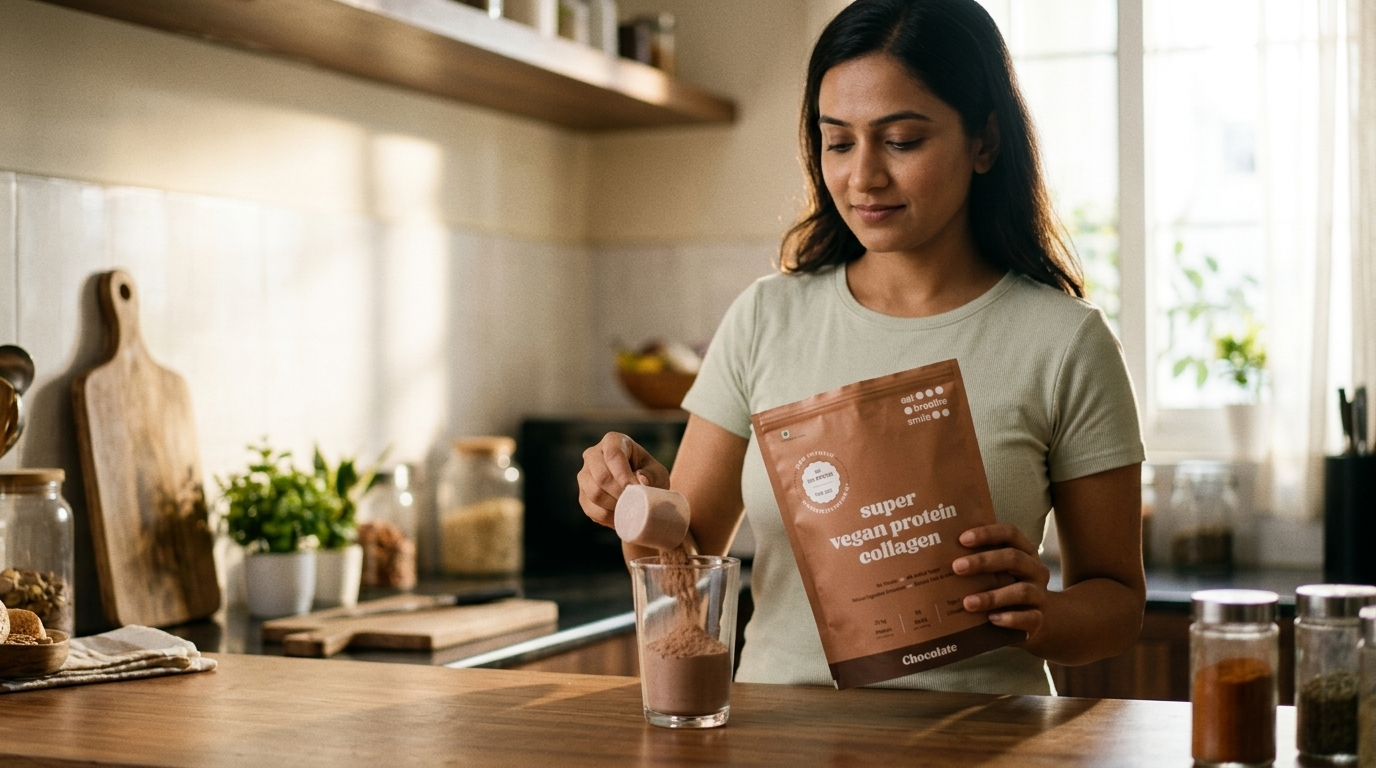
SUPER PLANT COLLAGEN PROTEIN combines hemp seed protein and rice protein isolate specifically to achieve a complete amino acid profile the same way paneer does naturally, through complementary amino acids rather than a single source, making it a genuine dairy-free alternative for the completeness advantage covered in Section 8.
What Else Is in the Formula
Beyond the protein blend, SUPER PLANT COLLAGEN PROTEIN includes Amla and Acerola Cherry for Vitamin C. Research published in the Journal of Clinical Biochemistry and Nutrition confirmed Amla's exceptional bioavailable Vitamin C activity, relevant to this component, alongside Astaxanthin and Seabuckthorn for antioxidant support.
Four Flavours
SUPER PLANT COLLAGEN PROTEIN is available in Unflavoured, ideal for mixing into any recipe without altering taste, Chocolate for a richer everyday shake, Pineapple for a lighter option best blended cold, and Pink Guava for another fruit-forward alternative.
11. Related Reading
12. Frequently Asked Questions
How much protein is actually in 100g of paneer?
Approximately 18 grams, measured as-eaten. This is a genuinely solid figure, comparable to several dals in their dry form. Section 1 covers this directly.
Is paneer actually a good protein source, or is it overrated?
It's genuinely good, not overrated, but often assumed higher than it actually is. Its real strengths are completeness, calcium, and convenience. Section 3 covers this honestly.
What vegetarian foods actually beat paneer on protein per 100g?
Dry dals like masoor and urad at roughly 24-25g, and nuts and seeds like hemp, peanuts, and almonds at 21-31g raw, though these compare different preparation states. Section 5 and 6 cover this in detail.
Why does paneer feel like it should have more protein than it actually does?
Its rich texture and prominent role in protein-focused meals create an intuitive impression that outpaces the actual number. Section 2 covers this perception gap.
What is the main advantage paneer has over plant protein sources?
Natural amino acid completeness without needing to pair it with another food, plus calcium and zero preparation time. Section 8 covers this advantage in full.
What is a good vegan alternative to paneer for protein?
A complete plant protein blend like SUPER PLANT COLLAGEN PROTEIN, combining rice and hemp protein for the same completeness paneer offers naturally. Section 10 covers this alternative in full.
Should I stop eating paneer and switch to something else entirely?
Not necessarily. Paneer remains a genuinely good, complete protein source. The more useful approach is understanding its actual numbers and building a balanced day around it. Section 9 covers this practical approach.