


Not Losing Weight Despite Dieting? 8 Hidden Reasons
- Weight loss plateaus despite genuine dietary effort are almost never about willpower. They are usually explained by one or more of eight identifiable factors: undercounted calories, portion creep, constipation and slow gut motility, water retention, insufficient protein, poor sleep and cortisol, gut microbiome imbalance, and prolonged undereating that triggers metabolic adaptation.
- Constipation and slow gut motility can add real, measurable weight to the scale independent of fat loss, since retained stool has physical mass. This is one of the most overlooked reasons the scale does not move even when fat loss is genuinely happening.
- Water retention from sodium, carbohydrates, hormonal fluctuations, and stress can mask a week or more of real fat loss. Weekly averages and body measurements give a more accurate picture of progress than daily scale readings.
- Insufficient protein intake, common in a diet built around rice, roti, and vegetables, leads to muscle loss during a calorie deficit, which lowers metabolic rate and makes continued weight loss progressively harder over time.
- PRO-GUT Vegan Protein Collagen from Eat Breathe Smile addresses the protein gap directly, while SuperCleanse supports the gut motility that prevents retained digestive weight from masking real progress on the scale.
- All EBS products are FSSAI approved, MSDS certified, and tested for heavy metals. 100 percent natural. 100 percent vegan. No preservatives.
- Why the Scale Isn't Moving: Reframing the Problem
- The 8 Hidden Reasons: Full Comparison Table
- Hidden Reasons 1 and 2: Calorie Miscounting and Portion Creep
- Hidden Reason 3: Gut Motility and Trapped Weight
- Hidden Reason 4: Water Retention and Hormonal Bloating
- Hidden Reason 5: Insufficient Protein Intake
- Hidden Reason 6: Poor Sleep and Cortisol
- Hidden Reason 7: Gut Microbiome and Insulin Resistance
- Hidden Reason 8: Undereating and Metabolic Slowdown
- Who This Affects Most and How to Measure Real Progress
- Related Reading
- Frequently Asked Questions
"I am eating less and the scale is not moving" is one of the most common and most frustrating experiences in weight management, and it is rarely explained by the advice that usually follows: eat even less, exercise even more. In most cases, something specific and identifiable is happening beneath the surface, and it is very often not primarily about the diet itself. Gut motility, water retention, protein intake, sleep, and gut bacterial balance all influence the number on the scale independently of how disciplined someone is being with their calorie intake.
At Eat Breathe Smile, PRO-GUT Vegan Protein Collagen addresses the protein gap that stalls many Indian women's weight loss, while SuperCleanse supports the gut motility that prevents retained digestive weight from masking real progress. Every EBS product is FSSAI approved, MSDS certified, and tested for heavy metals, with reports on the EBS certifications page.
As Health and Life Coach Nipa Asharam observes when working with women who feel stuck: the plateau conversation almost always uncovers one of these eight factors once we look past the food diary itself. A woman eating a genuinely reasonable diet who is also chronically constipated, sleeping five hours a night, and undereating protein has at least three separate reasons her weight is not reflecting her effort, and none of them are solved by eating less.
Last reviewed: July 2026
1. Why the Scale Isn't Moving: Reframing the Problem
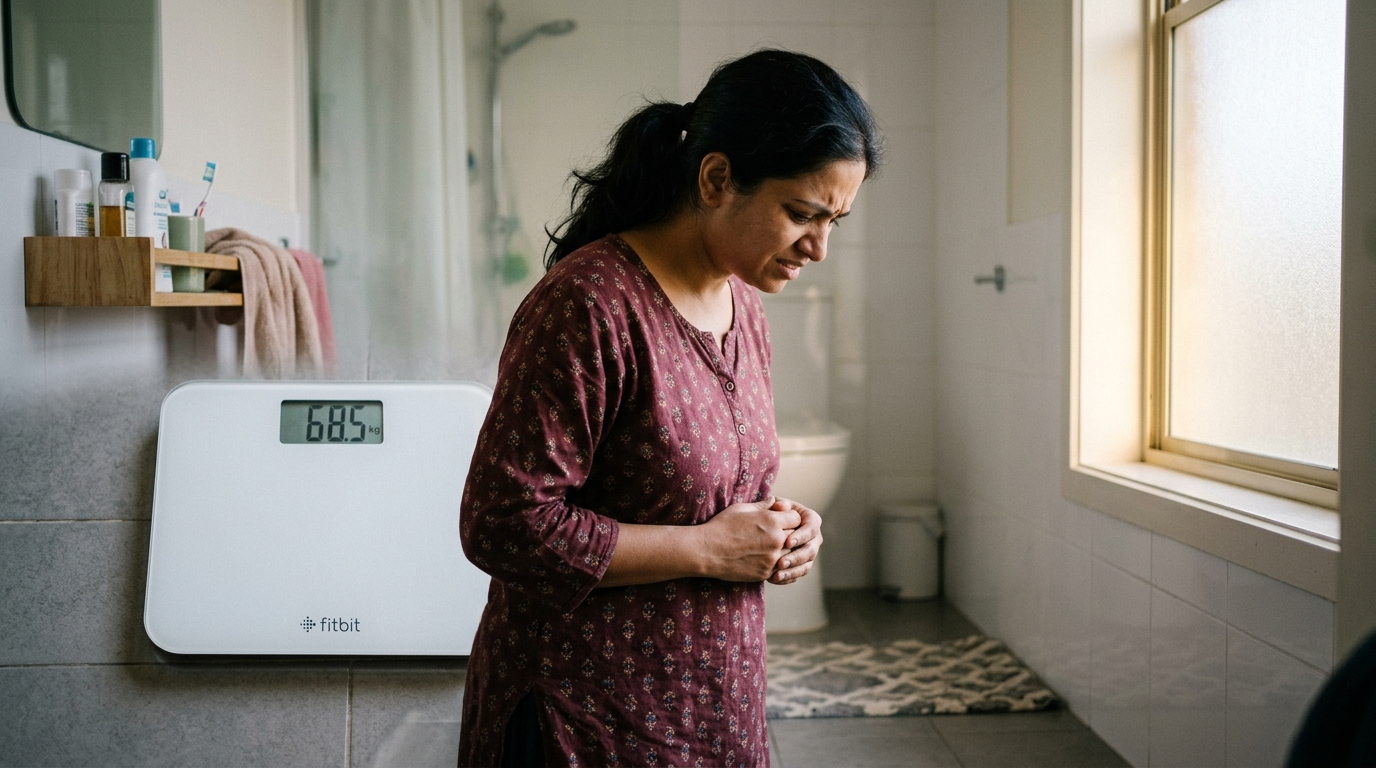
Before looking at the eight specific reasons, it helps to understand why "eat less, move more" often fails as advice even when the underlying logic of calories in versus calories out is not wrong.
The Scale Measures More Than Fat
Body weight at any given moment reflects fat mass, muscle mass, water, and the contents of the digestive tract, all combined into a single number. Genuine fat loss can be happening while the scale stays flat or even rises slightly, if water retention, digestive contents, or measurement inconsistency are moving in the opposite direction at the same time. This is not a flaw in the scale, it is a limitation of using a single daily number to track a process that involves several independently fluctuating factors.
Why "Eat Even Less" Usually Makes Things Worse
The default response to a stalled scale is almost always to reduce calorie intake further, but as covered in Section 9, this can trigger metabolic adaptation that actively works against continued weight loss. Understanding which of the eight hidden reasons applies to your specific situation is a far more productive starting point than defaulting to a more restrictive diet.
The measurement gap: Studies on self-reported dietary intake have consistently found that people underestimate their actual calorie consumption by a meaningful margin, often without any intention to misreport. Cooking oil, ghee, sauces, and larger-than-estimated portions are the most common sources of this gap. Before assuming a hidden physiological reason is entirely responsible for a stall, an honest and precise recheck of actual intake, including oil and condiments, is a reasonable first step.
2. The 8 Hidden Reasons: Full Comparison Table
| Hidden Reason | How It Stalls Weight Loss | What Helps |
|---|---|---|
| Calorie miscounting | Oil, ghee, and portions undercounted, quietly erasing the deficit | Precise measurement of oil and condiments for one to two weeks |
| Portion creep | Serving sizes gradually increase without conscious awareness | Periodic re-measurement of "known" portions |
| Constipation and gut motility | Retained stool adds real physical weight independent of fat | Fiber, water, movement, SuperCleanse for gut motility support |
| Water retention | Sodium, carbohydrates, hormones, and stress mask fat loss on the scale | Weekly average tracking; body measurements alongside weight |
| Insufficient protein | Muscle loss during deficit lowers resting metabolic rate | Adequate daily protein; PRO-GUT to fill the dietary gap |
| Poor sleep and cortisol | Disrupted hunger hormones and reduced insulin sensitivity | Prioritising 7 to 8 hours of consistent sleep |
| Gut microbiome imbalance | Increased inflammation and reduced insulin sensitivity | Fiber, fermented foods, gut-supportive habits |
| Undereating and metabolic adaptation | Body reduces energy expenditure in response to prolonged deficit | Moderate, sustainable deficit with adequate protein |
3. Hidden Reasons 1 and 2: Calorie Miscounting and Portion Creep
Reason 1: Calorie Miscounting
Oil and ghee are calorie-dense and easy to underestimate, since a generous pour during cooking adds up quickly without registering as a significant addition. Sauces, chutneys, and the oil used for tempering (tadka) are similarly easy to overlook. A precise, honest recount of actual oil and condiment use for one to two weeks, rather than assuming portions are accurate, frequently reveals a meaningful gap between intended and actual calorie intake.
Reason 2: Portion Creep
Portions that were accurately measured when a diet began tend to drift larger over time as familiarity replaces careful measurement. A cup of rice estimated by eye after several months of dieting is frequently larger than the cup of rice that was measured with a proper cup at the start. Periodically re-measuring "known" portions catches this drift before it accumulates into a meaningful daily surplus.
Before assuming a hidden hormonal or gut-related reason is entirely responsible for a plateau, a genuinely precise two-week food log, including oil, ghee, and condiments measured rather than estimated, is worth doing first. This does not need to become a permanent habit, but it clarifies whether the stall is primarily about intake accuracy before looking further into the other seven reasons.
4. Hidden Reason 3: Gut Motility and Trapped Weight
This is one of the most overlooked reasons the scale does not reflect genuine progress, particularly for Indian women whose diets and lifestyles often predispose them to constipation.
Why Retained Stool Has Real Weight
Stool retained in the colon due to constipation or slow gut motility has physical mass, and chronic constipation means this mass accumulates rather than being regularly eliminated. For a woman who is consistently constipated, some portion of her body weight at any given time is retained digestive material rather than fat or muscle, and this weight fluctuates independently of actual fat loss happening underneath it.
SuperCleanse for Gut Motility Support
Slow gut motility can also overlap with other digestive patterns such as SIBO, which is worth ruling out if bloating and irregular digestion accompany the stalled weight loss. Research published in the Journal of Evidence-Based Integrative Medicine confirmed Ajwain's documented digestive and carminative properties, relevant to the gut motility support that addresses this hidden reason. SuperCleanse combines Ajwain with Senna and Triphala (Amalaki, Bhibhitaki, and Haritaki) for gentle gut motility support, taken half a teaspoon in warm water on alternate nights. For women whose weight loss efforts have stalled despite genuine dietary discipline, addressing gut motility alongside diet often reveals fat loss that was already happening but was masked by retained digestive weight.
5. Hidden Reason 4: Water Retention and Hormonal Bloating
What Drives Water Retention
Sodium intake, carbohydrate intake (each gram of stored carbohydrate holds approximately 3 grams of water), hormonal fluctuations across the menstrual cycle, and cortisol from stress all influence how much water the body holds at any given time. These fluctuations of 1 to 2 kilograms are entirely normal but can easily obscure a week or more of genuine fat loss on a daily scale reading.
The Premenstrual Water Retention Pattern
Progesterone rises during the luteal phase, the two weeks before menstruation, and is associated with increased fluid retention alongside its digestive effects. Women who weigh themselves daily without accounting for cycle timing often interpret this predictable premenstrual weight increase as a failure of their diet, when it is a temporary and expected hormonal pattern that resolves once menstruation begins.
Tracking Progress More Accurately
Hormonal water retention often shows up alongside the bloating patterns covered separately, and telling the two apart matters for choosing the right response. Weighing at the same time under similar conditions and averaging across a full week, rather than reacting to any single day's number, filters out much of this noise. Body measurements (waist, hips) and how clothing fits provide additional information that a daily scale reading alone cannot, particularly during weeks when water retention is fluctuating for hormonal or dietary reasons unrelated to fat loss.
PRO-GUT: Filling the Protein Gap Most Indian Diets Leave
Complete hemp and rice protein for muscle retention during a calorie deficit. Seabuckthorn for gut lining support. Amla and Acerola Cherry for Vitamin C. One scoop with or after breakfast daily. FSSAI approved, heavy metal tested.
Shop PRO-GUT Vegan Protein Collagen6. Hidden Reason 5: Insufficient Protein Intake
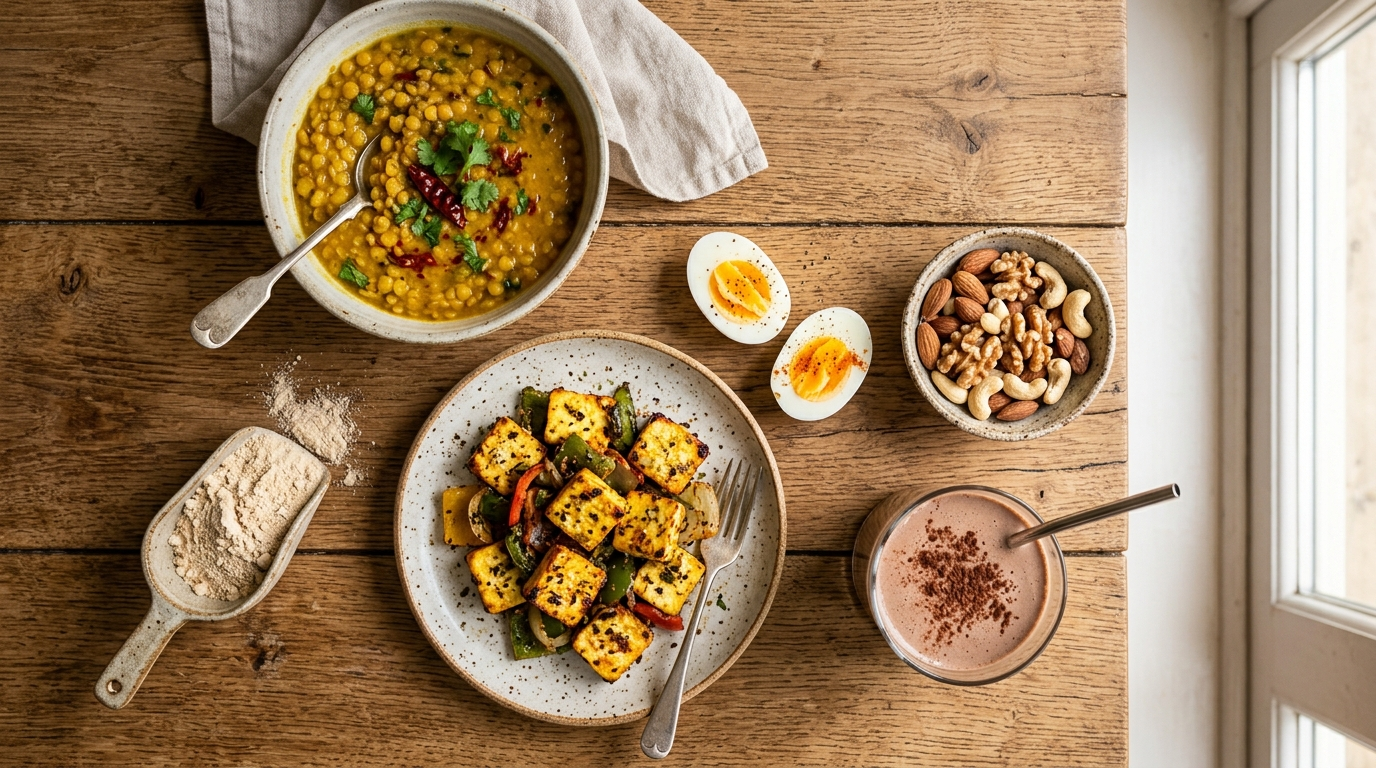
This is one of the most consequential and most common hidden reasons specifically in the context of the typical Indian diet.
Why Protein Preserves Metabolic Rate
During a calorie deficit, the body loses both fat and some muscle mass unless protein intake is adequate to signal the body to preserve muscle tissue. Muscle is metabolically active, meaning it burns calories even at rest, so muscle loss during dieting lowers resting metabolic rate over time. This creates a frustrating pattern where continued dieting becomes progressively less effective, not because willpower has failed but because the body's calorie-burning baseline has genuinely dropped alongside the muscle that was lost.
Protein intake also intersects with the iron absorption topic covered in the haemoglobin and iron guide, since many protein-rich foods also support iron status.
The Indian Diet Protein Gap
Research published in the American Journal of Clinical Nutrition confirmed that protein co-ingestion significantly reduces the postprandial glucose and insulin response from carbohydrates eaten at the same meal, in addition to protein's well-documented role in preserving muscle mass during a deficit. A diet built primarily around rice, roti, and vegetables, with protein sources like dal and paneer present but often in modest portions, frequently falls short of the protein needed to protect muscle mass during active weight loss.
PRO-GUT for the Protein and Satiety Gap
PRO-GUT Vegan Protein Collagen provides complete hemp and rice protein, supplying the full amino acid profile needed to support muscle retention during a calorie deficit. Beyond the direct metabolic benefit, protein is also the most satiating macronutrient, meaning adequate protein intake reduces the between-meal hunger that often derails a calorie deficit through unplanned snacking. One scoop with or after breakfast provides a consistent daily protein anchor that most Indian diets otherwise leave unfilled.
A practical protein target: A reasonable daily protein target during active weight loss is approximately 1 to 1.2 grams per kilogram of body weight. For a 65 kilogram woman, this is roughly 65 to 78 grams of protein daily, spread across meals. Most women following a traditional Indian diet without deliberate protein planning fall meaningfully short of this target, which is one of the most fixable hidden reasons on this list.
A Structured Way to Fix This: The 2-Week High Protein Fat Loss Program
For women who want a guided framework rather than figuring out protein targets and meal structure alone, the 2-Week High Protein Fat Loss Program from EBS builds a practical, protein-forward meal structure around exactly this gap, pairing daily protein targets with a simple two-week framework. It works well alongside PRO-GUT as the daily protein anchor, giving both the target and the day-to-day structure needed to hit it consistently.
7. Hidden Reason 6: Poor Sleep and Cortisol

How Sleep Deprivation Undermines a Diet
Sleep below 6 to 7 hours per night disrupts ghrelin and leptin, the hormones that regulate hunger and fullness, typically increasing appetite and cravings for high-calorie foods the following day. Poor sleep also elevates cortisol, and research published in the Indian Journal of Psychological Medicine confirmed the significant cortisol-reducing effects of adequate stress management, underscoring how directly cortisol elevation from poor sleep and chronic stress can work against weight loss efforts through appetite and fat storage pathways.
The Insulin Sensitivity Connection
Poor sleep reduces insulin sensitivity even after a single night of inadequate rest, meaning the same meal produces a larger blood sugar and insulin response than it would after adequate sleep. Since insulin is a fat-storage-promoting hormone, this reduced sensitivity favours fat retention even when calorie intake is unchanged, making sleep a direct rather than peripheral factor in whether a calorie deficit translates into visible fat loss.
8. Hidden Reason 7: Gut Microbiome and Insulin Resistance
How Gut Bacteria Influence Weight
An imbalanced gut microbiome is associated with increased systemic inflammation and reduced insulin sensitivity, both of which make fat loss more difficult even under a controlled calorie deficit. Research published in Gut Microbes confirmed the documented relationship between gut microbiome composition and hormonal and metabolic signalling, establishing the biological basis for why gut health is relevant to weight management beyond simple calorie counting.
PRO-GUT for Gut Lining and Digestive Support
Cumin and Fennel in PRO-GUT support digestive enzyme activity, while Seabuckthorn omega-7 supports the gut mucosal lining directly relevant to the gut barrier integrity that influences systemic inflammation. Addressing gut health alongside dietary calorie management provides a dimension of support that calorie counting alone does not reach, particularly relevant for women whose weight loss has stalled despite consistent dietary effort over an extended period.
9. Hidden Reason 8: Undereating and Metabolic Slowdown
What Metabolic Adaptation Actually Means
When calorie intake is too low for an extended period, the body responds by reducing its resting energy expenditure, becoming measurably more efficient and burning fewer calories than expected for its size. This adaptation occurs partly through muscle loss (covered in Section 6) and partly through direct hormonal changes that lower overall metabolic rate as a protective response to perceived scarcity.
Signs that undereating may be the actual cause of a plateau include persistent fatigue, feeling cold more often than usual, hair thinning, irregular or missed periods, and a stall that has persisted for several weeks despite very low reported calorie intake. If several of these signs are present alongside a stalled scale, increasing calorie intake moderately, alongside adequate protein, is often more productive than further restriction.
Why More Restriction Often Backfires
Research published in Nutrition Reviews confirmed dietary fiber's role in supporting satiety and gut transit at moderate, sustainable intake levels, relevant to why moderate rather than extreme dietary restriction tends to be more sustainable and metabolically protective. A woman who responds to a plateau by cutting calories further, when metabolic adaptation from prior undereating is the actual cause, often finds the scale becomes even less responsive rather than more, since the body's reduced energy expenditure has already offset much of the calorie reduction.
- A stalled scale despite genuine dietary effort usually reflects one or more of eight identifiable factors rather than a lack of discipline: calorie miscounting, portion creep, constipation and gut motility, water retention, insufficient protein, poor sleep and cortisol, gut microbiome imbalance, and undereating-driven metabolic adaptation.
- Constipation and slow gut motility add real physical weight to the scale independent of fat loss. SuperCleanse's Ajwain, Senna, and Triphala combination supports the gut motility that prevents this retained weight from masking genuine progress.
- Insufficient protein is one of the most common and most fixable hidden reasons, since a diet built around rice, roti, and vegetables frequently falls short of the protein needed to preserve muscle during a calorie deficit. PRO-GUT provides complete protein to fill this gap.
- Water retention from sodium, carbohydrates, hormones, and stress can mask a week or more of genuine fat loss. Weekly averages and body measurements give a more accurate picture than daily scale readings.
- Responding to a plateau by cutting calories further is often the wrong move if metabolic adaptation from prior undereating is the actual cause. Moderate, sustainable deficits with adequate protein tend to produce more consistent long-term results than aggressive restriction.
10. Who This Affects Most and How to Measure Real Progress
Measuring Progress Beyond the Scale
Body measurements (waist, hips, arms), how clothing fits, energy levels, and progress photos taken under consistent lighting and conditions all provide information that a single daily scale number cannot. For women dealing with any of the water retention, gut motility, or hormonal factors covered in this article, these additional measures often show progress well before the scale reflects it.
11. Related Reading
12. Frequently Asked Questions
Why am I not losing weight even though I am eating less?
Several factors can offset or mask a calorie deficit: undercounted calories, water retention, insufficient protein causing muscle loss, constipation adding retained weight, and prolonged undereating triggering metabolic adaptation. This article covers all eight hidden reasons. Identifying which applies to you is more useful than eating even less.
Can constipation really affect the number on the scale?
Yes, meaningfully. Retained stool has physical weight, and chronic constipation means this accumulates rather than being eliminated regularly. SuperCleanse supports the gut motility that clears this retained weight. Section 4 covers this hidden reason in full.
How much water retention is normal, and when does it hide fat loss?
Daily fluctuations of 1 to 2 kilograms from sodium, carbohydrates, hormones, and stress are normal and can mask a week or more of fat loss, especially premenstrually. Weekly averages and body measurements give a more accurate picture than daily readings. Section 5 covers this in detail.
Is protein really that important for weight loss?
Yes, significantly. Protein preserves muscle mass during a deficit, keeping metabolic rate elevated, and is the most satiating macronutrient. Most Indian diets built around rice and roti fall short of the protein needed to protect muscle during weight loss. PRO-GUT fills this gap. Section 6 covers the practical protein target.
Can poor sleep stop weight loss even with a perfect diet?
Yes. Sleep below 6 to 7 hours disrupts hunger hormones and reduces insulin sensitivity, favouring fat storage even with unchanged calorie intake. Section 7 covers the sleep-cortisol-insulin connection in full.
How does gut health affect weight loss specifically?
Gut bacterial imbalance is associated with increased inflammation and reduced insulin sensitivity, both making fat loss harder even under calorie control. Section 8 covers this connection and how PRO-GUT's Seabuckthorn and Cumin and Fennel support gut lining and digestion.
Can eating too little actually stop weight loss?
Yes, through metabolic adaptation, where the body reduces energy expenditure in response to prolonged undereating. This is why aggressive restriction can eventually stop producing weight loss, and why moderate, sustainable deficits with adequate protein tend to work better long-term. Section 9 covers this in full.